
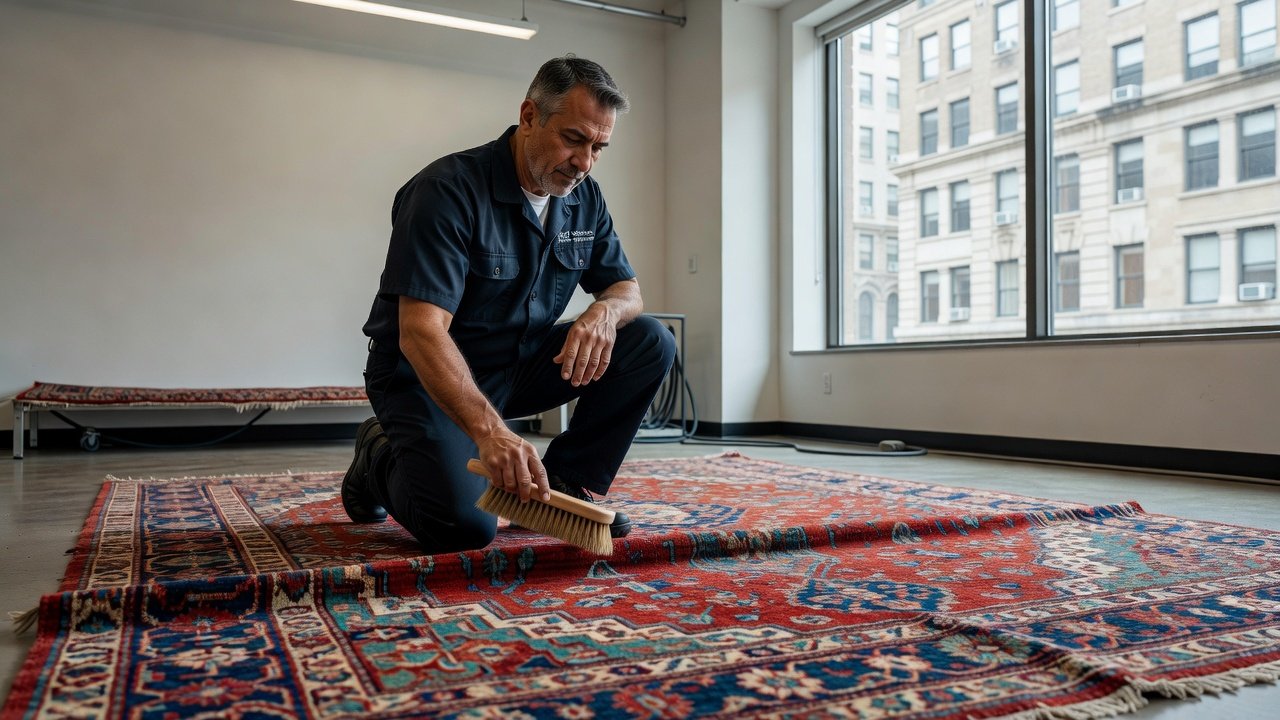
Trusted Why Choose Us Why Rug Cleaning Services in Upper West Side, Manhattan: 2026 Guide for Local Residents
What’s really happening inside that rug you’ve been vacuuming every week? Residents across the Upper West Side ask us this more often than you’d think and the honest answer is that vacuum passes alone aren’t enough. Soil, allergens, and grime work their way down into the pile where surface cleaning can’t reach. That’s the gap where our rug cleaning services in Upper West Side, Manhattan genuinely make a difference, and it’s worth understanding exactly where DIY ends and professional work begins before you make any decisions about your rugs.
We’ve cleaned thousands of rugs across this city from prewar co-ops on West End Avenue to brownstones in Park Slope, loft conversions in Williamsburg, and high-rises in Midtown East. NYC apartments present cleaning challenges that simply don’t exist in suburban homes: no outdoor space to dry a wet rug flat, radiator steam that raises indoor humidity in winter, and a steady load of subway particulates tracked in from Columbus Avenue or Broadway. What works in a house with a driveway and a sunny yard doesn’t translate here.
This post is our honest breakdown. Some things you can handle yourself without risk. Others genuinely need professional tools, experience, and the right chemistry. We’ll tell you which is which and explain what the real cost of getting it wrong looks like.
What You Can Safely Handle at Home
We’re not going to pretend every rug needs us. A capable Upper West Side homeowner with a few good supplies can manage routine maintenance without doing any harm and staying on top of that routine actually makes professional cleanings more effective when they do happen.
Vacuuming the face of the rug two to three times per week in high-traffic areas is the single most valuable thing you can do yourself. Use a suction-only attachment or a beater bar set to the right pile height and vacuum both sides a couple of times a year when the rug is small enough to flip. Spot-treating a fresh spill immediately with cold water and a clean white cloth, working from the outside of the stain inward, is also well within DIY territory for most fiber types. A mild, pH-neutral solution works for many common spills on synthetic rugs. Keep it simple: blot, don’t scrub, and stop before you oversaturate the foundation.
Rotating your rug every six months to even out foot traffic and sun exposure is something anyone can do, and it genuinely extends the life of the piece. Airing a rug out over a balcony railing for a few hours if you have the railing clearance is fine too. None of this requires us.
Where DIY Goes Wrong and Why It Goes Wrong Here
Here is where we need to be direct, because the mistakes we see most often aren’t caused by carelessness. They’re caused by applying suburban cleaning logic to NYC apartment conditions.
The most common error we see from clients across the Upper West Side and up into Inwood is overwetting. Someone uses a rental steam cleaner or a home carpet machine, saturates a wool or silk rug, and then has no way to dry it properly in a 750-square-foot apartment. The IICRC’s S100 Standard for Professional Cleaning of Textile Floor Coverings recommends professional hot-water extraction or immersion washing for wool and natural-fiber rugs specifically to avoid shrinkage and color bleeding both of which happen fast when moisture sits in a pile that can’t dry within 24 hours. We’ve picked up rugs that smelled fine on the surface but had active mold colonies in the foundation from a single home cleaning attempt six months earlier.
The second mistake is using the wrong chemistry. Over-the-counter enzyme cleaners and pet-odor sprays that are safe for wall-to-wall synthetic carpet will strip natural dyes from hand-knotted wool. A client on Riverside Drive came to us with a 6×9 Afghan rug where an entire border had gone from deep red to a washed-out rust after one application of a product labeled “safe for all rugs.” It wasn’t. Restoring that dye damage cost significantly more than a professional cleaning would have.
Third: vigorous scrubbing. We understand the instinct there’s a stain, apply effort. But scrubbing forces the spill deeper into the foundation and distorts the pile direction in hand-knotted pieces, sometimes permanently. The American Lung Association notes that rugs and carpets can trap allergens, dust mites, pet dander, and mold spores, making regular deep cleaning especially important for asthma and allergy sufferers. That’s the right reason to clean thoroughly but scrubbing harder at home doesn’t achieve it; it just redistributes the problem.
What Genuinely Needs a Professional and the Real Reasons Why
When a rug needs full immersion washing, odor neutralization, fringe restoration, or any kind of structural repair, the tools and space required simply don’t fit in a Manhattan apartment. Our facility handles controlled submersion washing with ph-balanced solutions calibrated to the specific fiber type, followed by centrifugal extraction and climate-controlled flat drying. There is no consumer equivalent to that process and attempting to replicate it in a bathtub on the Upper West Side something we’ve seen attempted creates more problems than it solves.
Pet accidents that have reached the rug backing require enzyme treatment applied at depth and thorough extraction under controlled conditions. Surface deodorizing covers the smell temporarily; it doesn’t address the uric acid crystals that have bonded to the fibers and will reactivate every time humidity rises. In a New York winter with radiators running, that smell will come back within weeks without proper treatment.
Antique, silk, or high-value hand-knotted rugs the kind you’re more likely to find in older apartments in Tribeca or prewar buildings near Central Park West belong in professional hands from the first sign of soiling. The Rug and Home industry estimates that hand-knotted Oriental and Persian rugs can last 100 years or more with proper cleaning and storage, but improper DIY cleaning is among the top causes of premature fiber damage. That’s not a sales pitch; it’s the honest reason we take before-and-after documentation seriously on every piece we handle.
According to the IICRC, area rugs should be professionally cleaned every 12 to 18 months depending on foot traffic and household conditions. In a busy Upper West Side apartment with children, pets, or frequent guests, erring toward the 12-month end of that range makes sense.
Why We’re the Right Call for Upper West Side Rugs Specifically
We know this neighborhood. We know what the floors look like in prewar co-ops on West 86th Street, the kind of soil that builds up near doorways on Amsterdam Avenue, and the particular humidity challenges of apartments that run steam heat from October through April. That context matters when we’re deciding how to approach a specific piece.
We offer free pickup and delivery throughout the Upper West Side, free pad-down after cleaning, and clear pricing before any work begins. We don’t charge by surprise. We document the condition of every rug when it arrives and again when it’s ready to go back and we’ll tell you honestly if something isn’t worth the cost of restoration versus replacement. Not every rug needs our most intensive service, and we’ll say so.
That transparency is the core of why clients from Astoria to Park Slope keep coming back to us and referring neighbors. We treat the rugs the way we’d want someone to treat ours.
Frequently Asked Questions
How often should I have my rugs professionally cleaned in an Upper West Side apartment?
The IICRC recommends professional cleaning every 12 to 18 months for most area rugs, with frequency depending on foot traffic, pets, and household conditions. In a typical Upper West Side apartment with regular use, we generally recommend annual cleaning. If you have pets or children, or if the rug sits near a building entrance, every 10 to 12 months is more appropriate. Routine vacuuming between professional cleanings keeps soil from compacting into the foundation and makes each professional wash more effective.
Can I spot-clean a wool or silk rug at home without risking damage?
You can safely blot fresh spills on most rugs using cold water and a clean white cloth immediately, before the liquid sets. For wool, avoid any product with bleach, alkaline surfactants, or enzyme formulas not specifically labeled for wool. For silk, we recommend nothing beyond cold water blotting and an immediate call to us. The fiber structure of silk is extremely sensitive to pH changes and friction, and even a gentle scrub can cause irreversible pile distortion. When in doubt, blot and call; the spill is far easier to treat professionally when it’s fresh.
Why should I choose Eastside Rug Cleaning over other services in Upper West Side, Manhattan?
We specialize exclusively in rugs not wall-to-wall carpet, not upholstery, not general housekeeping. That focus means every technician on our team understands fiber types, dye chemistry, and construction methods across hand-knotted, hand-tufted, flatwoven, and machine-made rugs. We offer free pickup and delivery in the Upper West Side, honest pre-cleaning assessments, and flat pricing with no hidden fees. We also return your rug with a complimentary pad-down, which extends the life of both the rug and your floor. Our clients in this neighborhood trust us because we’re straightforward about what their rug needs and what it doesn’t.
Ready to Schedule a Pickup on the Upper West Side?
If your rug is overdue for a professional cleaning, has a stain you’re not sure how to approach, or simply hasn’t been deep cleaned since before the pandemic, we’re ready to help. Contact Eastside Rug Cleaning at eastsiderugcleaning.com to schedule a free pickup anywhere on the Upper West Side. We’ll assess your rug, give you a clear quote, and return it clean, dry, and flat ready to go back down on your floor where it belongs.
Our services
Skilled Team Backs Cleaning in Upper West Side, Manhattan · High Traffic Rug Cleaning for Upper East Side Homes and B… · Skilled Team Backs Cleaning in Upper East Side, Manhattan · Skilled Team Backs Cleaning Upper East Side, Manhattan · Skilled Team Backs Cleaning in Upper East Side, Manhattan · Skilled Team Backs Cleaning Upper East Side, Manhattan