
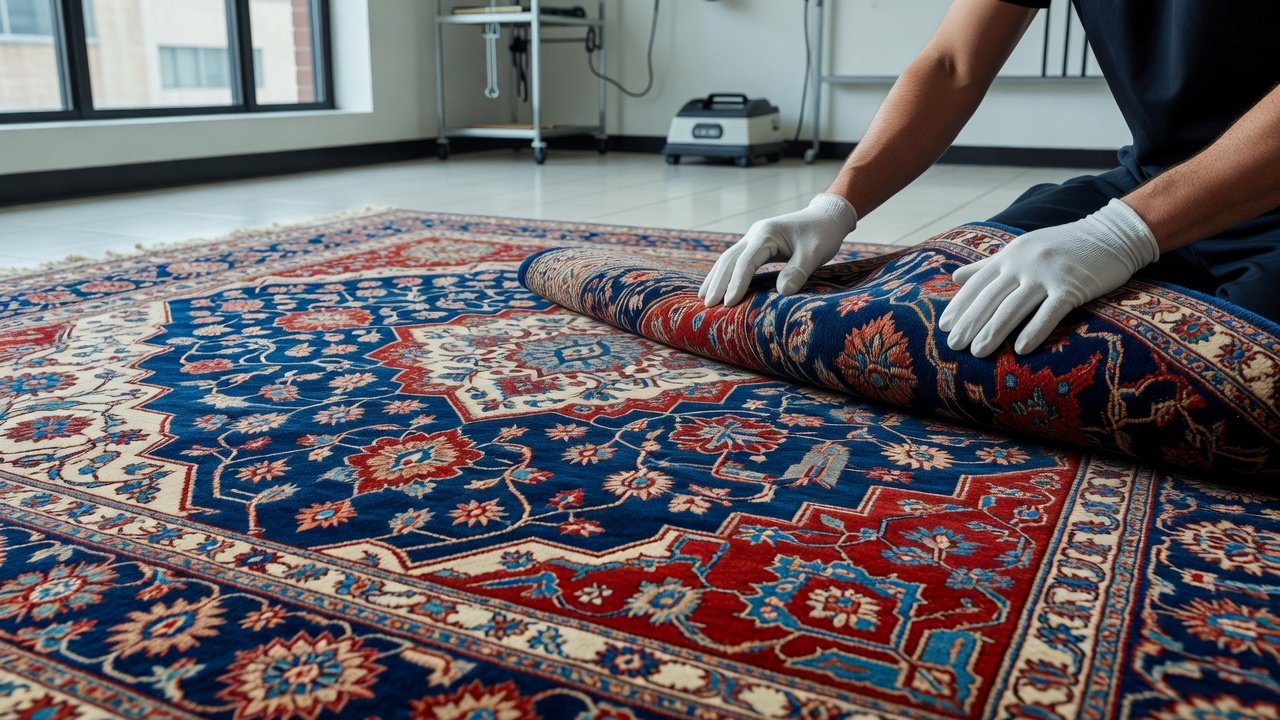
Trustworthy Silk Rug Cleaning New York in Forest Hills, Queens: 2026 Guide for Forest Hills Residents
A silk rug is one of the few things in a Forest Hills apartment that can genuinely be ruined in a single afternoon and it happens more often than people expect. Silk fibers are protein-based, extraordinarily fine, and almost chemically defenseless against alkaline detergents, heat, and aggressive agitation. The wrong cleaner, even one with a truck and a cheerful Yelp page, can cause irreversible fiber breakdown, color bleed, or distortion in the foundation weave before the rug even dries. If you are holding a quote right now, or preparing to hand a piece over to someone, read this first.
Silk rug cleaning in New York requires a specific skill set fiber testing, pH-neutral chemistry, controlled immersion or dry-room washing, and slow, flat drying without mechanical heat. We have cleaned silk rugs from Forest Hills townhouses, Astoria co-ops, Upper East Side prewar apartments, and Tribeca lofts. The process does not change much by neighborhood, but the conditions in each home humidity levels, subfloor construction, pet history, years of urban particulate absolutely do affect what cleaning will cost and how complicated it gets.
This post gives you a straight look at what silk rug cleaning costs in 2026, what pushes that number up or down, what a legitimate job includes versus what gets billed as an add-on, and most importantly how to verify that whoever you hire actually knows what they are doing.
What Silk Rug Cleaning Costs in 2026: Honest Numbers
For a standard hand-knotted or hand-woven silk rug cleaned by a qualified professional in the New York metro area, expect to pay somewhere between $6 and $12 per square foot. A 4×6 piece runs roughly $145 to $290. A 9×12 common in Forest Hills dining rooms and living spaces lands between $650 and $1,300 depending on condition and construction.
Art silk (viscose or mercerized cotton sold as silk) typically costs less to clean but is actually harder to handle safely; some cleaners charge a premium for it precisely because it mats and distorts so easily. If you are not sure what fiber your rug contains, any reputable cleaner should perform a burn test or water-drop test before quoting you a final price.
| Rug Size | Estimated Range (2026) |
|---|---|
| 4×6 (24 sq ft) | $145 – $290 |
| 6×9 (54 sq ft) | $325 – $650 |
| 8×10 (80 sq ft) | $480 – $960 |
| 9×12 (108 sq ft) | $650 – $1,300 |
| Oversized (12×15+) | $900 – $1,800+ |
These ranges reflect full-service professional cleaning at a facility — not on-site steam cleaning, which is generally inappropriate for silk and should be declined regardless of price.
What Drives the Cost Up or Down
Construction complexity. A tightly hand-knotted Persian or Chinese silk rug with 400+ knots per square inch takes significantly longer to clean safely than a flatweave or coarser pile. More time and more careful handling means higher cost.
Soil load and prior damage. We picked up a 6×9 Qum silk rug from a client near Austin Street in Forest Hills last spring. The rug had lived under a dining table for six years with no professional cleaning — ground-in food soil, pet dander, and a grease stain near one corner. The cleaning itself was straightforward, but pre-treatment and careful stain work added about $80 to the base price. That is fair. Heavy soiling is real labor.
Dye stability. Silk takes dye intensely, which means unstable dyes bleed intensely. If a rug tests poorly for colorfastness, the cleaner needs to use extra-controlled wet time and lower water temperature throughout. That adds cost.
NYC pickup and delivery. Most Forest Hills residents cannot transport a large rug without a vehicle, and Queens logistics are not trivial. Reputable cleaners either include pickup and delivery in the quote or charge a flat fee, typically $50 to $120 for the borough depending on distance and rug size. Always confirm this before agreeing to anything.
Add-on treatments. Moth treatment, fringe restoration, deodorizing, and fiber protector application are legitimate services but should be itemized separately. The IICRC recommends against bundling add-ons into a base cleaning price without disclosure, and any cleaner who cannot separate line items is worth questioning.
Condition of the backing and foundation. Silk pile over a wool or cotton foundation is more forgiving than an all-silk construction. Fully silk-foundation rugs require slower drying and more careful tensioning to prevent warp distortion — which adds time and therefore cost.
What a Legitimate Job Includes and What It Doesn’t
A complete, professional silk rug cleaning should include fiber and dye testing before any water contact, full dust removal (either mechanical dusting or compressed-air treatment), hand or controlled-immersion washing with pH-neutral chemistry, rinse until the water runs clear, and flat drying in a controlled environment away from direct heat. The American Lung Association notes that rugs can trap allergens, dust mites, and mold spores, which means thorough rinsing is not optional it is the whole point of the service.
What is typically not included in a base quote: fringe hand-cleaning, spot dyeing for color loss, structural repairs to damaged warp or weft, mothproofing, or any stain that requires enzyme treatment beyond standard pre-spotting. These are fair add-ons. What should never appear on your invoice is a surprise “delicate fiber surcharge” that was not disclosed upfront, or a charge for re-cleaning if the first pass did not remove a stain that was never scoped.
Choosing the Right Contractor: What to Ask, What to Avoid
The credential that matters most in this industry is IICRC certification specifically the Carpet Cleaning Technician (CCT) or Textile Cleaner (WRT/ASD) designation. According to the IICRC, its S100 Standard for Professional Cleaning of Textile Floor Coverings recommends professional immersion washing for wool and natural-fiber rugs, and the same standard applies to silk. Ask any prospective cleaner whether they follow S100 procedures and whether their technicians hold current certifications. A vague answer is informative.
Ask where the rug is actually cleaned. Many companies that advertise New York addresses subcontract to facilities in New Jersey or Long Island not inherently a problem, but you deserve to know. Ask whether cleaning is done on-site at a plant or offsite, and whether you can visit the facility. A plant that will not let you see where your rug goes is a yellow flag.
Red flags to walk away from: any company offering flat-rate silk rug cleaning without inspecting the rug first; anyone who quotes by phone alone without asking about construction or condition; any on-site steam cleaning pitched as safe for silk (it is not); and any company that cannot provide verifiable references or show you before-and-after documentation of comparable work.
The Rug and Home industry estimates that hand-knotted Oriental and Persian rugs can last 100 years or more with proper care, but improper cleaning is among the leading causes of premature fiber damage. For a rug worth several thousand dollars, spending an extra thirty minutes vetting the cleaner is not excessive caution. It is basic math.
One Way to Avoid Overpaying
Get three quotes and ask each company to break the estimate into line items: base cleaning by square foot, pickup and delivery, and any add-ons. Then compare the base rates, not the totals. Some companies in the Park Slope and Williamsburg market quote very low base rates and then pad with handling fees and “delicate material surcharges” that push the final number well above a competitor who quoted honestly from the start. Line-item transparency is the fastest way to separate straightforward operators from ones building margin into ambiguity.
Frequently Asked Questions
How often should silk rugs in New York City be professionally cleaned?
According to the IICRC, area rugs should be professionally cleaned every 12 to 18 months depending on foot traffic and household conditions. In New York City specifically, urban dust, subway particulates, and higher ambient humidity accelerate soil accumulation, so most silk rugs in active Forest Hills or Upper East Side homes benefit from professional cleaning once a year. Lighter-use pieces in a bedroom or study can reasonably go 18 months between services.
Can silk rugs be cleaned on-site, or do they need to go to a facility?
Silk rugs should almost always be cleaned at a proper facility, not on-site. On-site steam cleaning applies heat and moisture that silk fibers cannot tolerate consistently, and it provides no controlled drying environment — which in a typical NYC apartment with limited airflow significantly increases the risk of mold, color migration, and foundation distortion. A qualified cleaner will pick up the rug, clean it at their plant, and return it dry and flat.
What questions should I ask before hiring a silk rug cleaner in Queens?
Ask whether the company holds current IICRC certification, whether they perform fiber and dye testing before cleaning, where the physical cleaning takes place, and whether pickup and delivery are included in the quote. Ask for the quote broken into line items base rate per square foot, any stain pre-treatment, and delivery so you can compare accurately across companies. Any cleaner who resists these questions or cannot answer them specifically is worth skipping.
If your silk rug is due for cleaning or if it has a stain, you have been putting off we are happy to take a look. Eastside Rug Cleaning serves Forest Hills and the broader Queens area, along with clients across Tribeca, Astoria, the Upper West Side, and throughout the five boroughs. We do fiber testing before any cleaning begins, and we give you a line-item quote before we touch the rug. Reach out at eastsiderugcleaning.com or call us directly to schedule a pickup assessment.
Our services
Rug Color Restoration Manhattan · Skilled Team Backs Cleaning in Upper West Side, Manhattan · High Traffic Rug Cleaning for Upper East Side Homes and B… · Skilled Team Backs Cleaning in Upper East Side, Manhattan · Skilled Team Backs Cleaning Upper East Side, Manhattan · Skilled Team Backs Cleaning in Upper East Side, Manhattan