
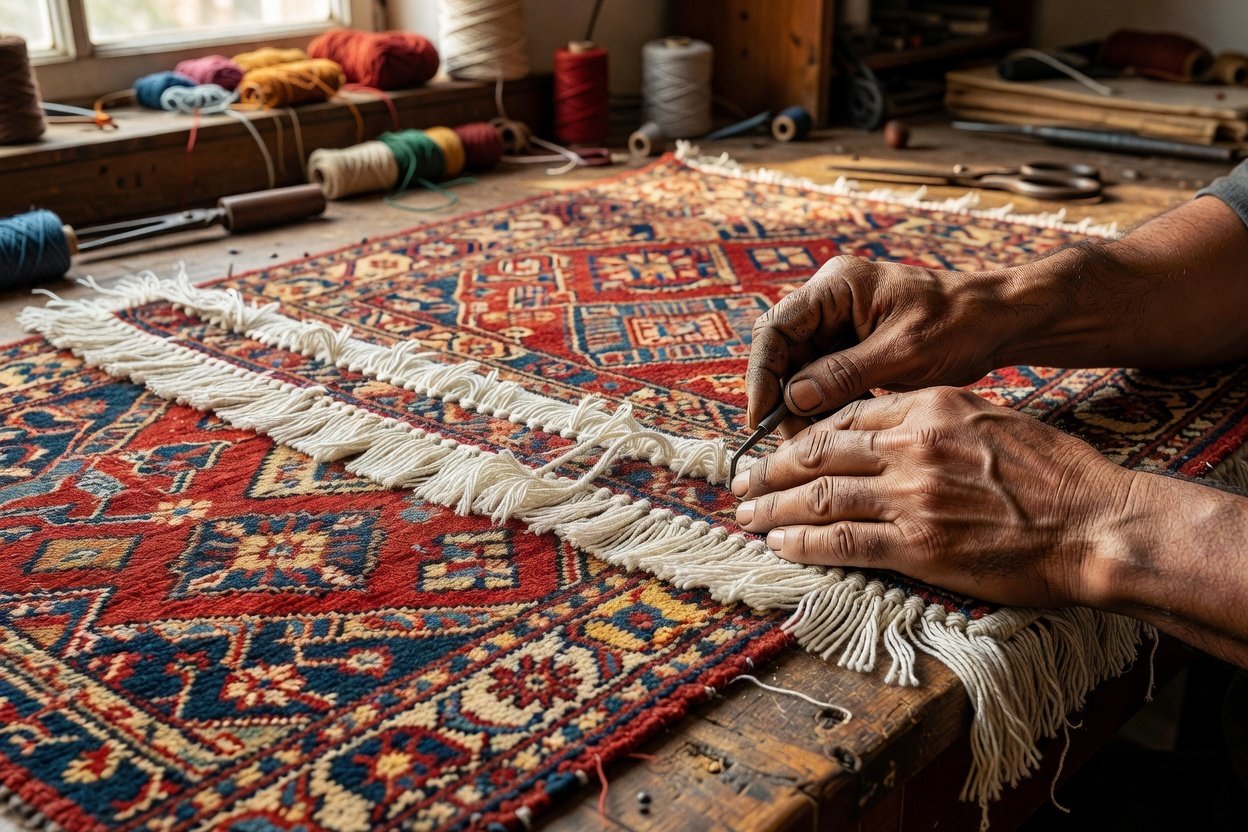
Trusted Rug Repair and Fringe Restoration NYC: 2026 Guide for Forest Hills, Queens Residents
Most fringe and structural rug damage can be stopped before it becomes irreversible. Catch a loose end or a fraying edge early, and a skilled restorer can stabilize it in under an hour. Wait too long, and the pile unravels past the knot line, which means a full reweave rather than a simple binding repair. Here is what we see most often, and what actually fixes it.
Why Forest Hills Rugs Take a Particular Kind of Beating
We pick up rugs from Austin Street, from the co-ops along Queens Boulevard, and from the attached townhouses near the Forest Hills Gardens historic district. These homes share a few things in common: hardwood floors under the rugs, radiant or baseboard heat that dries air aggressively in winter, and hallway runners that absorb the kind of concentrated foot traffic that a living-room rug never sees. That combination accelerates wear at the fringe base, stresses the warp threads, and causes pile to compress unevenly.
Forest Hills also sits close to the LIE and the LIRR corridor. Residents track in a level of fine particulate that accelerates abrasion inside the pile. The American Lung Association notes that rugs and carpets can trap allergens, dust mites, pet dander, and mold spores, which is a real concern in homes where rugs go years without a professional wash. That embedded grit acts like sandpaper against the knots and warp threads every time someone walks across the rug.
The Six Problems We Diagnose Most Often
1. Fringe That Is Thinning or Disappearing
Symptoms: Short, ragged fringe on one end only, or fringe that breaks off when touched.
Likely cause: Fringe on hand-knotted rugs is the exposed warp thread, not decorative trim sewn on afterward. When a vacuum cleaner rolls over it repeatedly or someone tucks it under the rug to hide it, the individual strands snap at different lengths. The damage is almost always worse at the foot-traffic end.
Professional fix: We assess whether the original warp threads are still intact below the pile line. If they are, we can hand-knot new cotton fringe directly to the existing warps and whip-stitch the end to lock it. If the warps have receded into the pile, we need to add a new binding first. This is a two-step repair, but it is the only way to prevent further unraveling.
Can it be prevented? Yes. Never vacuum fringe directly. Use a hand brush or lift the fringe clear of the vacuum head. Do not tuck fringe under the rug; this breaks the threads faster than anything else we see.
2. Edges That Are Curling or Buckling
Symptoms: Corners lifting, one long side rolling up, rug lying flat in the center but rippled at the border.
Likely cause: In Forest Hills apartments and townhouses, rugs placed over radiated heat or on top of thin synthetic pads dry unevenly. The pile side and the foundation dry at different rates, causing differential tension. We also see this in rugs that have been rolled the wrong direction during storage, a common mistake when residents move rugs seasonally in pre-war buildings with low storage space.
Professional fix: Mild cases respond to professional immersion washing followed by blocking, where we stretch the rug back to its original dimensions and allow it to dry under tension. Severe cases require edge re-binding or a partial reweave of the selvedge, which is the wrapped thread along the long sides of the rug.
Can it be prevented? Use a quality pad that breathes, and never store a wool rug tightly rolled against its natural nap direction.
3. Pile Loss and Bald Spots
Symptoms: Visible foundation threads in a specific zone, often in a doorway or in front of a sofa.
Likely cause: Deep soil accumulation is the underlying culprit more often than the foot traffic itself. The IICRC’s S100 Standard for Professional Cleaning of Textile Floor Coverings makes clear that grit lodged at the base of the pile cuts warp and weft threads with every footstep. By the time the bald spot is visible, the damage has usually been progressing for two or three years.
Professional fix: Pile reweaving. We match the wool or silk by fiber content, weight, and dye lot as closely as possible, then hand-knot new pile into the exposed foundation. On a 9-by-12 Persian, a bald area the size of a dinner plate is roughly a half-day repair. The result is not invisible under a magnifier, but it is undetectable at normal viewing distance and, more importantly, structurally sound.
Can it be prevented? Schedule professional cleaning every 12 to 18 months. Do not wait until deep soil is visible at the surface. The Institute of Inspection, Cleaning and Restoration Certification recommends professional cleaning every 12 to 18 months depending on foot traffic and household conditions.
4. Moth Damage in Wool Rugs
Symptoms: Webbing on the underside, irregular patches of missing pile, larvae casings in the fringe or underneath furniture legs.
Likely cause: Wool moths in New York City peak from late spring into early fall. We find the worst cases in Forest Hills townhouses and in Park Slope brownstones where rugs sit partially under heavy furniture for years. Moths target the covered areas where humidity is higher and the rug is undisturbed.
Professional fix: Full immersion wash to kill all life stages, followed by pile restoration in the affected areas. We also treat the underside. The rug must dry completely before storage or reinstallation, because residual moisture invites reinfestation.
Can it be prevented? Move furniture periodically so the entire rug surface gets light and air. Have the rug professionally cleaned before any storage period longer than a month.
5. Color Bleeding After a DIY Wash
Symptoms: Red or blue dye migrating into the cream or ivory field, usually discovered after the rug is returned from a self-service wash facility or after a homeowner hoses it down on a rooftop or fire escape.
Likely cause: Many hand-knotted Oriental rugs use fugitive dyes, particularly older vegetable-dyed pieces from Iran, Afghanistan, or Turkey. Immersion in water without pH-controlled detergent causes the dye to migrate. We see this in Williamsburg and Astoria lofts where residents attempt to clean rugs without knowing the dye history of the piece.
Professional fix: Once a dye has migrated into the field, reversal is difficult and sometimes impossible. We can reduce the staining through targeted enzymatic treatment and controlled extraction, but full restoration usually requires re-dyeing the affected zone, which is skilled work. The Rug and Home industry estimates that hand-knotted Oriental and Persian rugs can last 100 years or more with proper care, but improper DIY cleaning is among the top causes of premature fiber damage.
Can it be prevented? Test for dye stability before any wet cleaning. Press a damp white cloth firmly against several colors. If color transfers, the rug needs professional assessment before it gets wet.
6. Fringe Turned Brown or Gray Without Being Dirty
Symptoms: Fringe looks clean but has turned an off-white, tan, or grayish tone that does not wash out.
Likely cause: Oxidation from alkaline cleaning products, or cellulose browning from moisture wicking through cotton warp threads. We see this often after homeowners use general-purpose carpet shampoo on wool rugs, or after a minor flood in a Tribeca or Murray Hill building where the rug absorbed water from below.
Professional fix: Fringe brightening with a controlled acidic rinse, followed by thorough drying. If the browning is from cellulose degradation, we assess whether the cotton threads are structurally compromised, which sometimes means replacing the fringe entirely rather than treating it.
Can it be prevented? Never use alkaline carpet shampoo on wool or cotton. pH-neutral detergent only.
A Recent Call from the Forest Hills Gardens Area
A client contacted us last spring about a 8-by-10 Tabriz that had been in her family since the 1970s. The fringe on one end had been tucked under the rug for years to keep it out of the way. When she finally pulled it back, the warp threads had snapped at the pile line and the selvedge on one long side had unraveled about four inches in from the corner. She was certain the rug was beyond saving. It was not. We re-bound the selvedge, hand-knotted new cotton fringe to the existing warp stubs, and returned the rug to her looking structurally stable and presentable. Total repair time was one day in our workroom.
Frequently Asked Questions About Rug Repair and Fringe Restoration in NYC
How much does rug repair and fringe restoration cost in NYC in 2026?
Pricing varies depending on the repair type and rug size. Fringe replacement on a standard 8-by-10 rug typically runs between $120 and $250. Selvedge re-binding starts around $80 to $150 depending on the length of damage. Pile reweaving is priced by the square inch and can range from $30 to $100 per square inch for hand-knotted work. We provide a written estimate after inspecting the rug in person or reviewing clear photos. Forest Hills clients can schedule a free pickup assessment directly through our website.
Can fringe be restored on an antique or heirloom Oriental rug without affecting its value?
Yes, when done correctly. The key is using the appropriate fiber, matching the weight and twist of the original warp thread, and attaching the new fringe directly to the existing warp structure rather than sewing decorative trim on top. Proper fringe restoration preserves the structural integrity of the rug end and does not diminish collector or appraisal value. We recommend documenting the repair with photos before and after for insurance or appraisal purposes.
How do I know if my rug needs repair, cleaning, or both?
Most rugs we inspect need both, and the order matters. We always clean before repairing because soil embedded in the pile changes how the fibers behave during reweaving, and because hidden damage often becomes visible after a thorough wash. If your rug shows fraying edges, thinning fringe, or any pile loss, have it professionally assessed before attempting any cleaning at home. A combined cleaning and repair service is often more cost-effective than addressing each separately, and it protects the rug from further damage during the process.
Schedule Your Forest Hills Rug Repair and Fringe Restoration
Don’t wait for fraying fringe, unraveling edges, bald spots, or moth damage to become more difficult to repair. Professional restoration can help stabilize damaged fibers, preserve your rug’s structure, and extend its usable life. A proper assessment can also determine whether your rug needs cleaning, repair, or both.
Eastside Rug Cleaning serves Forest Hills, Queens, Park Slope, Williamsburg, Astoria, Tribeca, and surrounding New York City neighborhoods. Our team will assess your rug, explain the recommended repairs, and provide an honest estimate before any work begins. Free pickup is available for Forest Hills clients.
Call Eastside Rug Cleaning or visit eastsiderugcleaning.com to request your rug repair assessment and schedule a pickup today.
Related from East Side Rug Cleaning: Trusted Skilled Team Backs Cleaning Services in Forest Hills, Queens · Trustworthy Silk Rug Cleaning New York in Forest Hills, Queens · Smart Oriental Rug Cleaning Manhattan 2026