
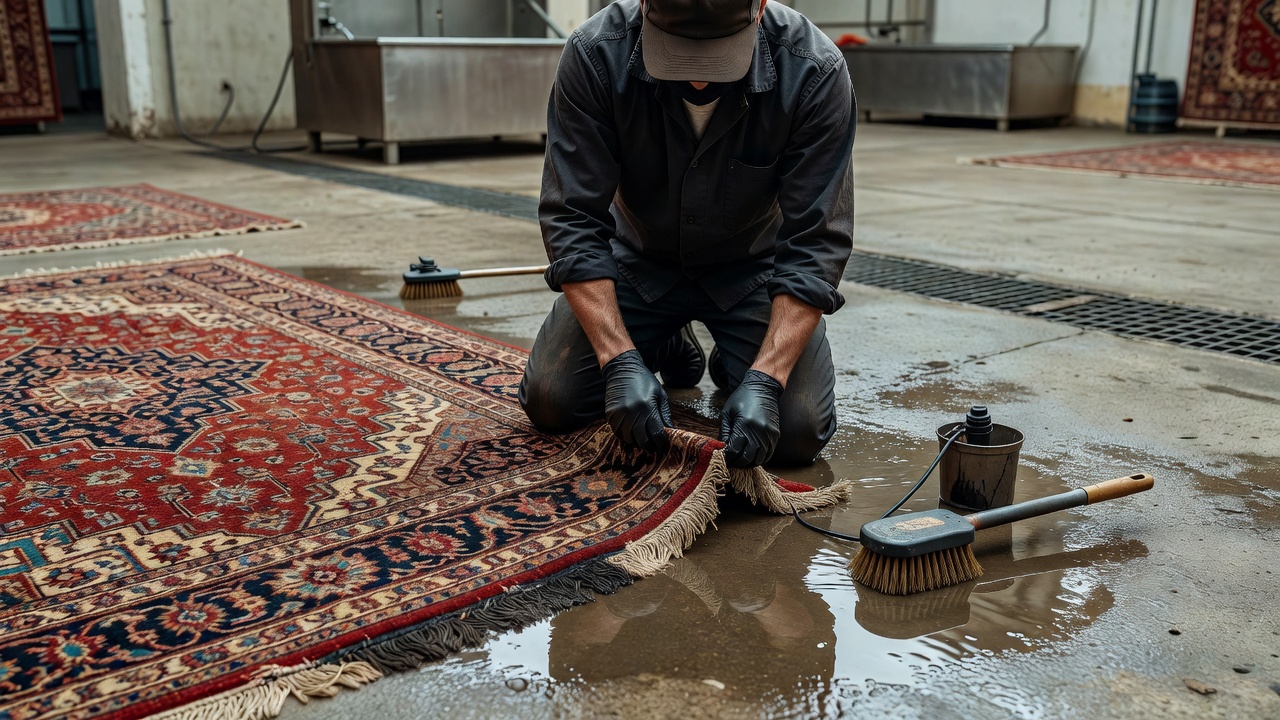
What You’re Doing to Your Rug Before Calling for Professional Rug Cleaning Upper East Side NYC
Most rug damage we see at Eastside Rug Cleaning didn’t happen from neglect. It happened from the wrong kind of effort. Homeowners across Astoria, Queens and Manhattan try to do the right thing, and then call us after the fact with a rug that’s stiffer, faded, or shrunk. Professional rug cleaning on the Upper East Side NYC is something we do every week, and the patterns in what goes wrong beforehand are consistent enough that we put this together.
This isn’t a lecture. It’s a breakdown of the actual problems we diagnose, how we identify them, and what the fix looks like, because understanding the problem is half the reason to trust the person solving it.
Scrubbing a fresh spill into the pile
The instinct to scrub is almost universal. A red wine spill on a hand-knotted Tabriz, a coffee splash on a flatweave, and the first thing most people grab is a paper towel and start rubbing.
The symptom we see: a fuzzy, distorted patch in the middle of an otherwise intact rug. Sometimes there’s a faint halo of discoloration spreading out from the treated area. On wool rugs, the fiber structure itself gets damaged by the friction, and that damage is permanent.
The cause is mechanical. Scrubbing pushes the spill deeper into the pile and breaks open the fiber cuticle. On natural dyes, rubbing also causes the color to migrate outward. We recently worked on an antique Caucasian rug from a client in Murray Hill whose housekeeper had blotted (correctly) and then scrubbed when the stain didn’t disappear immediately. The stain was mostly gone. The fiber damage was not.
The professional fix depends on how deep the residue has set. We use controlled immersion washing with pH-appropriate solutions, followed by careful pile-direction grooming. If the fiber is distorted, we can sometimes restore texture, but not always. Blotting from the outside in, with no lateral pressure, would have prevented this entirely.
Using grocery store spot removers on natural fibers
Oxi-based carpet sprays and enzyme cleaners designed for synthetic broadloom are not the same as rug-safe treatments. We see this mistake constantly from clients in Astoria and Williamsburg, where the foot traffic is real and the temptation to grab something off the shelf is understandable.
The symptom: bleached or yellowed areas, sometimes with a crusty residue. On silk or wool rugs, certain alkaline cleaners cause irreversible color loss within minutes of contact. The rug looks worse after treatment than it did with just the original stain.
The cause is chemistry. Wool has a natural pH tolerance of roughly 4.5 to 8.5. Many grocery store carpet cleaners run well above that. The IICRC’s S100 Standard for Professional Cleaning of Textile Floor Coverings specifically recommends pH-controlled solutions for wool and natural-fiber rugs to avoid shrinkage and color bleeding. Most consumer products don’t list pH, and most consumers don’t have a way to test it.
The professional fix usually involves neutralizing the residue and attempting color correction. On severely bleached wool, we sometimes refer clients to a restoration specialist for re-dyeing. Prevention is simple: don’t apply any product to a natural-fiber rug without knowing the fiber content and the product’s pH range. When in doubt, blot with cold water and call us.
Waiting too long between professional cleanings
New York City accelerates soil accumulation in rugs at a rate most homeowners underestimate. Subway particulates, street dust, and the humidity in pre-war buildings throughout the Upper East Side and Park Slope combine to push fine grit deep into the pile long before the rug looks visibly dirty.
The symptom: a rug that looks clean but feels flat, dull, or slightly stiff underfoot. When we inspect these rugs, the warp and weft threads at the foundation are often dark with compacted soil. That grit acts like sandpaper against the fiber with every footstep.
According to the Institute of Inspection, Cleaning and Restoration Certification (IICRC), area rugs should be professionally cleaned every 12 to 18 months depending on foot traffic and household conditions. In high-traffic NYC apartments, especially those with dogs or young children, annual cleaning is the realistic minimum. The American Lung Association also notes that rugs can trap allergens, dust mites, and mold spores, making regular deep cleaning especially important for anyone with asthma or allergies.
Don’t wait until deep soil becomes structural damage. The fix for compacted-grit deterioration is immersion washing combined with professional pile-lifting techniques, but fiber loss that has already occurred cannot be reversed. A rug cleaned on schedule costs far less over a decade than one cleaned reactively after years of embedded abrasion.
Running a rug through a residential washing machine
We hear this one from clients in Astoria, Queens more than anywhere else, probably because smaller rugs in NYC apartments feel manageable. A 3×5 runner or a bathroom accent rug gets tossed in the machine, and the result is either a shrunken, misshapen mess or a pile that’s matted flat and won’t recover.
The symptom: obvious dimensional changes, latex backing that has separated or balled up, or wool that has felted into a stiff mat. Fringe, if there was any, usually comes out tangled or detached.
The cause is a combination of mechanical agitation, water temperature variation, and spin-cycle tension. Wool fibers felt when they’re agitated in warm water. Natural dyes bleed when they’re not processed at a controlled temperature and pH. Most residential machines also don’t rinse thoroughly, leaving detergent residue that attracts new soil rapidly after the rug goes back down.
The Rug and Home industry estimates that hand-knotted Oriental and Persian rugs can last 100 years or more with proper cleaning and storage, but improper DIY cleaning is among the top causes of premature fiber damage. The professional fix for a machine-washed wool rug depends on the severity. Minor matting can often be addressed with steam and pile grooming. Felt damage and shrinkage are generally permanent.
Placing a wet rug flat on a hardwood or tile floor to dry
This one is a New York City problem specifically. Apartments in Tribeca, the Upper East Side, and throughout Queens rarely have outdoor space. After a spill or a DIY cleaning attempt, the rug gets laid flat indoors, sometimes with a fan running, and the homeowner considers the job done.
The symptom: mold or mildew odor developing within 48 to 72 hours, often accompanied by brown staining that wicks up from the foundation. On rugs with a cotton warp, the foundation can also shrink unevenly, causing permanent warping or curling at the edges.
The cause is trapped moisture with no airflow underneath. A rug dried on a hard floor sits in its own humidity. In the naturally high-humidity environment of a pre-war building, this can be enough to start mold growth in the foundation even if the surface looks dry.
The professional fix involves controlled drying in a climate-managed environment, sometimes with ozone treatment or enzyme-based odor neutralization if mold has already colonized the foundation. Full mold remediation on a rug is costly and not always fully effective. Suspending a rug vertically with airflow on both sides, or bringing it to a professional facility, prevents this entirely.
Ignoring fraying fringe until it becomes structural damage
Fringe on a hand-knotted rug isn’t decorative. It’s the exposed warp threads that hold the knots in place. When fringe frays, splits, or starts pulling back toward the pile, that’s the rug telling you the structural perimeter is compromised.
The symptom: short, uneven fringe with knots beginning to loosen along the end border. Sometimes clients describe it as the rug “unraveling at the ends.” In advanced cases, we see row after row of lost knots, which means lost pile.
The cause is usually a combination of foot traffic on the fringe itself and deferred maintenance. Vacuum cleaner beater bars also accelerate fringe damage significantly. We get calls from clients in Forest Hills and the Upper East Side who assumed fringe repair was a cosmetic fix they could put off. By the time they call, the damage has moved past the fringe and into the field of the rug.
The professional fix is fringe stabilization or re-knotting, depending on how far the damage has progressed. Don’t wait on fraying fringe. Restoration at the fringe stage is straightforward. Restoration once the pile border starts going is a longer, more expensive process, and some losses are unrecoverable.
Frequently Asked Questions About Professional Rug Cleaning Upper East Side NYC
How often should I schedule professional rug cleaning for a high-traffic apartment in Astoria or the Upper East Side?
The IICRC recommends professional cleaning every 12 to 18 months for most area rugs, but in a busy NYC apartment with pets or children, once a year is a more realistic target. Urban dust and subway particulates accumulate faster here than in suburban settings, and most rugs look clean on the surface well before they’ve reached a level of embedded soil that causes fiber damage.
Can fringe on a hand-knotted Oriental rug be repaired, or does fraying mean the rug is too far gone?
Fringe repair is very much possible when caught early. Fringe is structural, not decorative, so fraying fringe should be addressed before the damage moves into the pile border. Once knots in the field of the rug start loosening, repair becomes more involved and some pile loss may be permanent. If your fringe looks uneven or is pulling back toward the rug body, schedule an assessment soon rather than waiting.
What’s the difference between professional rug cleaning and having a carpet cleaning company treat the rug in place?
In-place carpet cleaning uses truck-mounted or portable extraction equipment designed for wall-to-wall synthetic carpet. Area rugs, especially hand-knotted wool and silk pieces, benefit from plant-based immersion washing where both sides of the rug are cleaned, the pile is properly rinsed, and drying is controlled. The IICRC’s S100 standard recommends immersion or hot-water extraction specifically for wool and natural-fiber rugs. In-place treatment often leaves residue in the foundation and doesn’t address soil embedded at the warp level.
Ready to stop guessing and get your rug properly cleaned?
If your rug has a stain that didn’t respond to spot treatment, fringe that’s starting to separate, or it simply hasn’t been washed in more than a year, those are the situations we handle every day for clients across Astoria, the Upper East Side, Park Slope, and the rest of NYC. We pick up, clean at our facility using fiber-appropriate methods, and return your rug in better condition than we found it. Contact Eastside Rug Cleaning at eastsiderugcleaning.com to schedule a pickup or get a cleaning estimate for your rug.
Related from East Side Rug Cleaning: Team Our Cleaning · Rug Cleaning City · Skilled Team Backs Cleaning for Fine Rugs in the Upper East Side