
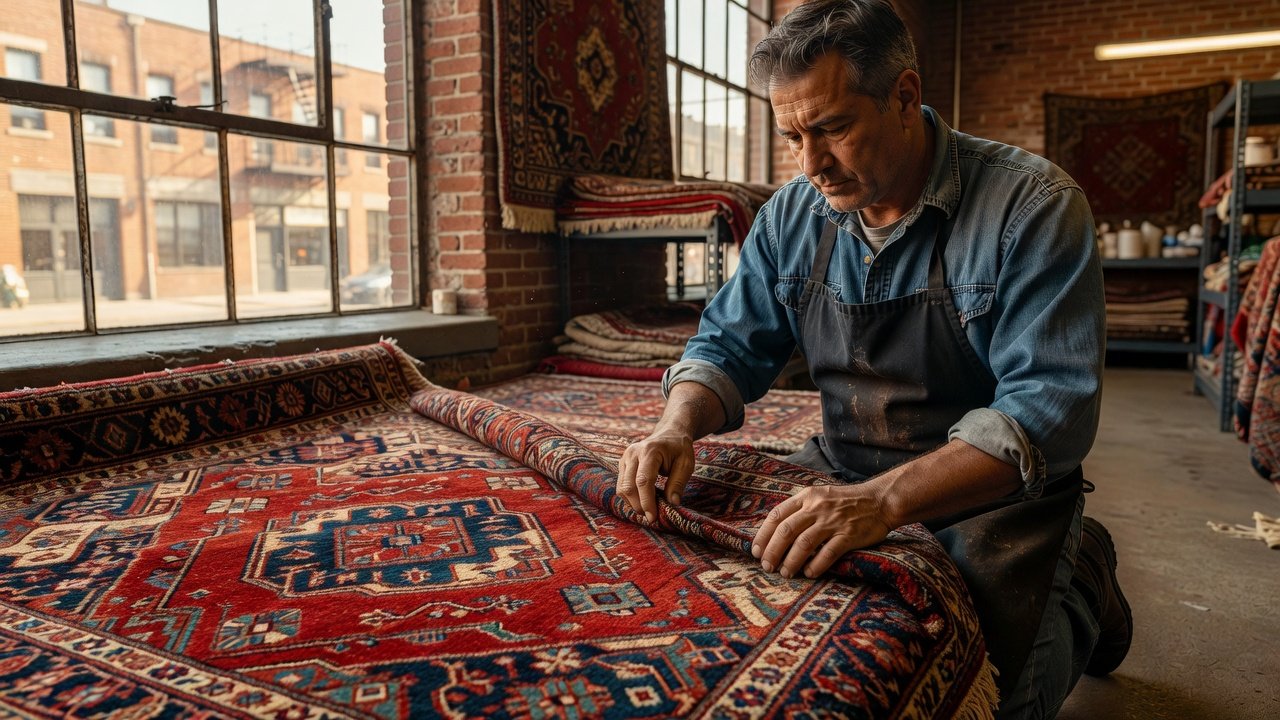
Essential Oriental Rug Cleaning Manhattan: 2026 Guide for Williamsburg Residents
Your rug is probably carrying more than you think. Between the L train dust that drifts in through cracked windows, the Bushwick-border foot traffic, and whatever made contact with your floor during last year’s renovation, the fibers in a hand-knotted Oriental or Persian rug are working overtime. Oriental rug cleaning Manhattan 2026 is a specific, skilled service and finding the right contractor in Williamsburg, Brooklyn is harder than it should be, partly because the market has gotten crowded with operators whose qualifications don’t match their prices.
Before you hand over a rug that may have taken an Azerbaijani weaver three years to finish, here is a practical checklist of what to confirm, what to ask, and what to walk away from.
Before You Start: Know What You’re Handing Over
Not every rug needs the same process. A 6×9 machine-made Moroccan-style flatweave from a Bedford Avenue shop is a different job than a 100-year-old Tabriz with silk highlights that a client brought to us after inheriting it from family. The American Lung Association notes that rugs and carpets can trap allergens, dust mites, pet dander, and mold spores which matters a lot in Williamsburg’s older building stock, where humidity runs high and windows are often sealed from October through April. Knowing your rug’s fiber content and approximate age before you call any cleaner puts you in a stronger position during that first conversation.
Pull back a corner. Look at the knots on the back. If the pattern is clear and the knots are hand-tied, you’re likely looking at a hand-knotted piece that warrants extra care. If the backing is latex or jute mesh, it’s machine-made. That distinction affects which cleaning method if safe and which contractor is actually equipped to handle it.
Step 1: Verify IICRC Certification Before Anything Else
The single most reliable credential in this industry is IICRC certification specifically the WRT (Water Damage Restoration Technician) and the RCT (Rug Cleaning Technician) designations. The Institute of Inspection, Cleaning and Restoration Certification maintains a public database where you can look up any company or individual technician by name. Do this. It takes ninety seconds and it tells you whether the person touching your rug has completed standardized training or just printed a business card.
According to the IICRC’s S100 Standard for Professional Cleaning of Textile Floor Coverings, wool and natural-fiber rugs require professional hot-water extraction or full immersion washing to avoid shrinkage and color bleeding. A contractor who isn’t certified may not know this distinction or may not care.
We’ve cleaned rugs brought to us from Park Slope, Forest Hills, and Murray Hill after uncertified operators left them stiff, shrunken, or with dye that bled into the field. It’s a fixable problem sometimes. Sometimes it isn’t.
Step 2: Ask Where the Rug Actually Gets Cleaned
This question catches more people off guard than it should. Many companies that operate in Williamsburg or advertise in Brooklyn subcontract the physical cleaning to a third facility sometimes one that isn’t set up for delicate Oriental work at all. You want to know: is there a dedicated wash floor? Is there a drying room with controlled humidity? Is the pH of the cleaning solution tested and adjusted per fiber type?
Legitimate shops will answer these questions directly. Evasion is a red flag. So is any answer that involves the phrase “we send it out to our partners” without being able to name those partners and describe their process.
Step 3: Get a Written Condition Report Before Drop-Off
A Bushwick client came to us in 2025 after a dispute with another cleaner not unlike the situation that made the news when a Brooklyn woman was arrested and held after police accused her of stealing rugs during a street stooping incident. The details of that case are specific to her circumstances, but the underlying anxiety is something we hear often: what happens to my rug while it’s not in my possession, and who’s accountable if something goes wrong?
The answer is a written condition report. Any reputable cleaner should document existing damage fringe wear, moth damage, color fading, prior repairs before your rug leaves your hands. This protects both parties. If a contractor refuses to do this or says it’s unnecessary, that’s a reason to pause.
Step 4: Understand the Pricing Structure
In 2026, professional Oriental rug cleaning in the New York City market typically runs between $4 and $8 per square foot for full immersion washing, depending on fiber, construction, and condition. A 9×12 hand-knotted Persian is going to run $430 to $870 at a reputable shop. Prices below that range in this market almost always mean corners are being cut shortened dwell time, inadequate rinsing, or machine agitation that isn’t appropriate for delicate pile.
Ask for an itemized estimate. Fringe cleaning, deodorizing, and stain pre-treatment are sometimes bundled, sometimes not. Know what you’re paying for.
Step 5: Ask About Drying — Specifically for NYC Apartments
This is the step most Williamsburg residents don’t think to ask about, and it’s one of the biggest sources of post-cleaning problems in New York City. In a dense urban environment with no outdoor drying space and humidity that shifts dramatically by season, a rug that doesn’t dry completely can develop mildew in the foundation fibers often without any visible sign on the surface.
The IICRC and cleaning industry professionals consistently note that New York City’s urban environment accelerates soil accumulation and complicates drying compared to suburban settings. A professional shop should have climate-controlled drying rooms. Ask how long drying takes and whether the rug is checked for moisture before it’s returned to you.
Step 6: Check Reviews, but Read Them the Right Way
Don’t just count stars. Read the negative reviews and look at how the company responded. A contractor who handles a complaint professionally — even if the complaint was unfair — tells you something real about how they operate. Look for specifics in positive reviews, too: a review that says “they removed a red wine stain from my grandmother’s Kashan and the fringe looks brand new” is more useful than “great service, highly recommend.”
Also check whether the company has a physical address you can verify. Williamsburg and the surrounding neighborhoods have seen a steady rise in pop-up rug cleaning operations in recent years businesses with a strong Instagram presence and no fixed facility. Those are the ones worth being cautious about.
Step 7: Confirm Pickup, Delivery, and Insurance Coverage
Most reputable cleaners serving the Williamsburg, Astoria, and Upper West Side markets offer free pickup and delivery for rugs over a certain size — typically 5×8 and above. Confirm this upfront, and ask whether the rug is insured during transport. Accidents happen. A company that carries transit insurance and is willing to tell you so is a company that takes the liability seriously.
Troubleshooting Tip: What to Do If a Cleaner Has Already Made a Mistake
If a rug comes back with dye bleeding, shrinkage, or a texture that’s off — act within 48 hours. Document everything with photos. Contact the company in writing first, which creates a record. If the damage was caused by improper method and the company is unresponsive, the IICRC has a consumer complaint process, and your credit card company may offer chargeback protection if you paid that way. We’ve helped clients recover value on damaged rugs through careful restoration work, but the sooner we see the piece after the damage occurs, the more options we have.
Frequently Asked Questions
How often should I have my Oriental rug professionally cleaned in a New York City apartment?
According to the IICRC, area rugs should be professionally cleaned every 12 to 18 months depending on foot traffic and household conditions. In a Williamsburg apartment with pets, children, or street-facing windows, annual cleaning is usually the right interval. The urban particulate load in NYC — subway dust, construction debris, street-level pollutants builds up faster than most residents expect.
Is it safe to have a hand-knotted Persian or Oriental rug picked up and transported for cleaning in Brooklyn?
Yes, provided the company uses padded rolling or wrapping during transport and carries transit insurance. Reputable cleaners serving Williamsburg and surrounding neighborhoods treat transport as part of the job, not an afterthought. Always confirm coverage before scheduling pickup, and ask for a written condition report at the point of handoff.
What questions should I ask before choosing an oriental rug cleaning Manhattan 2026 service?
The most important questions: Are your technicians IICRC-certified? Where is the physical wash facility? Do you provide a written condition report before cleaning begins? How do you dry rugs, and how do you confirm they’re moisture-free before return? What does your pricing include, and is it itemized? A contractor who answers all of these clearly and specifically has earned your consideration. One who deflects or generalizes has not.
Trust the Experts with Your Oriental Rug
We’ve been cleaning rugs across New York City for years from pre-war Tribeca lofts to ground-floor Williamsburg apartments with original hardwood and no airflow to speak of. Every rug we take in gets a condition report, a fiber assessment, and a cleaning method matched to its construction. If you have an Oriental or Persian rug that needs proper care, reach out to us at Eastside Rug Cleaning. We offer free pickup and delivery throughout Brooklyn and Manhattan, and we’ll give you a straight answer on what your rug needs before we ever touch it. Contact us at eastsiderugcleaning.com to schedule a pickup or ask a question.
Related from East Side Rug Cleaning: Rug Cleaning City · Rug Color Restoration Manhattan · Same Day Rug Cleaning on the Upper East Side