
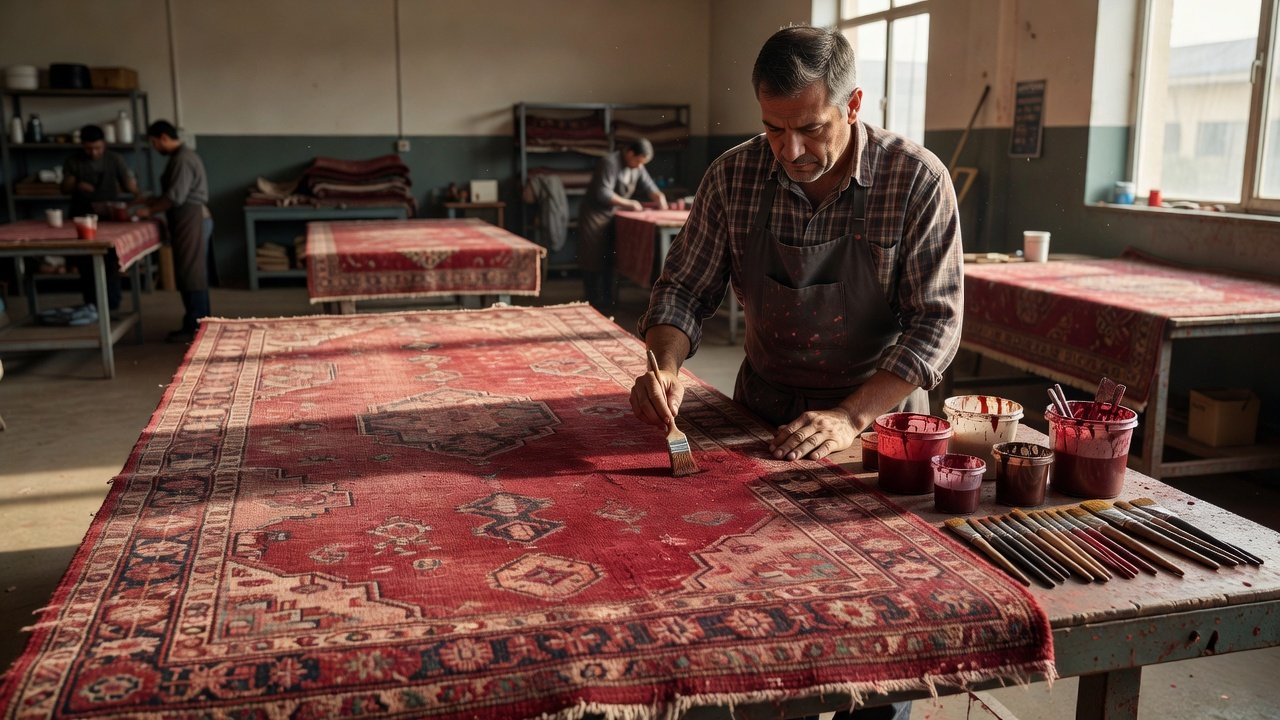
Rug Color Restoration in Forest Hills: What the Process Actually Looks Like
Spring in Queens has a way of exposing things. The apartment gets brighter, the windows open, and suddenly the rug you’ve been walking over all winter looks a lot more tired than you remembered. We see this every year from Forest Hills clients: rugs with faded fields, sun-bleached borders, or persistent staining that’s dulled an otherwise beautiful piece. Rug color restoration is one of the more complex services we offer, and most homeowners don’t know what they’re agreeing to until the work is underway.
This guide walks you through the process honestly, from assessment to final inspection, so you know what to expect before a single rug leaves your apartment. A recent client on Yellowstone Boulevard in Forest Hills brought us a hand-knotted Pakistani Bokhara, roughly 8 by 10 feet, that had faded badly on one side from years of direct afternoon sun through a southwest-facing window. The color on the affected half had shifted from deep burgundy to a washed-out salmon. She’d gotten quotes from two other companies and felt like nobody had really explained what the work would involve. We want to do better than that here.
Before you start: is color restoration actually right for your rug?
Not every faded rug is a candidate for color restoration, and no reputable cleaner should tell you otherwise. There are three situations where restoration makes sense: sun fading that has shifted the hue but left the fibers intact, chemical bleaching from improper spot treatments, and localized staining where dye re-application can blend the affected area back into the surrounding pile.
Rugs with severe fiber damage, dry rot, or extensive moth damage need structural repair before any dye work begins. If the pile is crushed flat or the foundation is compromised, adding color won’t help. According to the IICRC’s S100 Standard for Professional Cleaning of Textile Floor Coverings, pre-inspection and fiber identification are required steps before any restoration treatment, because the wrong dye chemistry on the wrong fiber can cause permanent color shift or bleeding.
The Rug and Home industry also notes that hand-knotted Oriental and Persian rugs can last 100 years or more with proper care, but improper dye application is one of the fastest ways to reduce that lifespan. If you’re unsure, get a professional assessment first. We offer free in-shop evaluations for Forest Hills and Queens residents.
Step 1: Fiber identification and dye compatibility testing
Before any cleaning or dye work happens, we identify exactly what your rug is made of. Wool, silk, cotton, and synthetic fibers each respond differently to dye. A wool rug from Tabriz takes acid dye well. A synthetic Pakistani copy does not. We use burn testing, feel, and construction analysis to confirm fiber content.
From there, we run a small dye test on an inconspicuous corner or fringe area. This tells us how the existing dye will react to wetting and heat, and whether the fiber will accept new color evenly. If you’ve had a previous cleaner apply an over-the-counter color refresher, that can complicate things considerably. We need to know about any prior treatments before we proceed.
Step 2: Full wash before any color work begins
Color cannot go onto a dirty rug. Soil, oils, and residue from prior spot treatments will block dye penetration and create blotchy results. We wash the rug first using a pH-appropriate shampoo matched to the fiber type, then rinse thoroughly. For most wool rugs from Forest Hills apartments, that means a gentle immersion wash followed by controlled centrifuge extraction.
The American Lung Association notes that rugs trap allergens, dust mites, pet dander, and mold spores at rates that most homeowners underestimate. In older Forest Hills apartment buildings with radiator heat and limited ventilation, that accumulation happens faster than in newer construction. The wash step isn’t just a prerequisite for dye work. It’s genuinely beneficial for the rug on its own.
After washing, the rug dries fully before we move forward. Applying dye to a damp rug produces uneven results. Drying time varies by pile height and fiber, but plan on 24 to 48 hours minimum.
Step 3: Color matching and formula development
This is where the craft really shows. We mix dye formulas by hand to match the undamaged areas of your rug as closely as possible. For a faded border, we’ll reference the interior field color and the fringe to triangulate what the original shade looked like. For localized staining, we match the immediately surrounding pile.
Color matching on an aged rug is not the same as matching a paint chip. Natural dyes oxidize over time, and vegetable-dyed rugs from regions like Isfahan or Kashan develop a patina that’s nearly impossible to replicate exactly with synthetic dyes. We tell clients upfront that the goal is a close visual match under your home’s lighting conditions, not a laboratory-perfect result. Most people find the outcome well exceeds their expectations once the rug is back in place.
Step 4: Dye application
Depending on the extent of the affected area, dye is applied by hand using brushes or fine applicators. For large faded fields, we may apply a diluted overall tint to bring the hue back into balance across the rug’s surface. For small bleach spots or staining, we work tuft by tuft if the rug warrants it.
The dye is then set using heat and fixatives appropriate to the fiber. Wool requires a different fixative chemistry than cotton or silk. We never rush the setting stage. Inadequately fixed dye will bleed the next time the rug gets wet, which is the most common failure we see in color work done by less experienced cleaners. We’ve picked up rugs from clients in Park Slope, Williamsburg, and Astoria that were re-dyed elsewhere and bled badly the first time they were professionally cleaned afterward.
Step 5: Final rinse and controlled drying
After the dye sets, the rug gets a final rinse to remove any unfixed dye or chemical residue. The rinse water should run clear before we stop. From there, we extract excess water and move the rug into our drying room under controlled temperature and airflow. Flat, even drying prevents the pile from leaning and keeps the foundation from warping or curling at the edges.
For Forest Hills clients, we pick up and deliver. You won’t need to figure out how to transport an 8-by-10 rug on the E or F train.
Step 6: Finishing, pile grooming, and final inspection
Once dry, the pile is brushed in the direction of the nap to restore its natural lay. Any fringe that was affected by fading or staining is addressed at this stage too. Don’t wait on fringe repair if it’s fraying. Loose fringe pulls weft threads and can accelerate damage to the rug’s end rows. We inspect the finished rug under multiple light sources, including daylight-balanced lamps that approximate natural window light, before we consider the job complete.
We photograph the rug before and after, and we’ll walk you through the results when we return it. If the match isn’t satisfactory in any area, we address it before delivery. That’s not a policy we publicize loudly, but it’s how we operate.
Troubleshooting tip: what to do if you see color transfer after the rug comes back
A small amount of residual dye transfer onto a damp cloth is not unusual in the first week after restoration, especially on wool rugs with deep, saturated colors. Wipe the area with a dry white cloth. If you see significant bleeding onto your floor or padding, call us immediately. That indicates a fixative issue and needs to be addressed before it becomes a larger problem. Do not attempt to rinse or spot-clean the rug yourself first. Water will spread the problem, not contain it.
Frequently Asked Questions About Rug Color Restoration in Forest Hills
How much does rug color restoration cost in Forest Hills, Queens?
Pricing depends on the size of the rug, the extent of color loss, and the fiber type. For a standard wool rug in the 6-by-9 to 8-by-10 range with localized fading or staining, most Forest Hills clients in 2026 pay between $300 and $700 for the full restoration process, including wash, dye work, and delivery. Rugs with extensive fading across the full field, or pieces made from silk or other delicate fibers, run higher. We provide written estimates after the initial assessment at no charge.
Can rug color restoration fix sun fading on an Oriental rug?
Yes, in most cases. Sun fading is one of the most common reasons Forest Hills clients contact us, particularly in apartments with south or west-facing exposures. If the fiber itself is intact and not degraded by UV exposure, we can re-introduce color to the affected areas and blend them with the undamaged portions. The result won’t be invisible under a magnifying glass, but under normal living conditions the rug reads as even and restored. Rugs with severe UV degradation where the pile feels brittle or breaks easily are harder to treat and may need fiber repair alongside color work.
How long does the rug color restoration process take?
From pickup to delivery, plan on 10 to 14 business days for most jobs. The wash and drying cycle alone takes several days when done correctly, and dye work on a hand-knotted rug is not fast if it’s done carefully. Shops that turn color restoration around in 48 hours are almost always cutting corners on drying time or dye-setting, which leads to the bleeding and blotching problems described above. We’ll give you a specific timeline when we assess your rug, and we’ll contact you if anything changes that estimate.
Restore Your Rug’s Color in Forest Hills
Sun fading, bleach spots, and stubborn stains can make a beautiful rug look worn and uneven. Professional rug color restoration begins with a careful assessment of the fibers and existing dyes to determine whether restoration is suitable. The process includes washing, color matching, controlled dye application, and a final inspection to help achieve an even, natural-looking result.
Eastside Rug Cleaning serves Forest Hills and surrounding Queens neighborhoods with professional rug cleaning, color restoration, pickup, and delivery. We provide free in-shop evaluations and written estimates so you can understand your rug’s condition, restoration options, and expected cost before work begins.
Visit eastsiderugcleaning.com or contact Eastside Rug Cleaning today to schedule your free rug color restoration evaluation.
Related from East Side Rug Cleaning: Rug Color Restoration Manhattan · Trustworthy Silk Rug Cleaning New York in Forest Hills, Queens · Trusted Skilled Team Backs Cleaning Services in Forest Hills, Queens
Our services
Skilled Team Backs Cleaning in Upper East Side, Manhattan · Skilled Team Backs Cleaning Upper East Side, Manhattan · Skilled Team Backs Cleaning in Upper East Side, Manhattan · Skilled Team Backs Cleaning Upper East Side, Manhattan · Skilled Team Backs Cleaning in Upper East Side, Manhattan · Skilled Team Backs Cleaning in Upper East Side, Manhattan