
Trusted Home Page New York in New York: 2026 Buyer’s Guide for NYC Rug Cleaning Customers
Spring hits New York like a switch one week you are layering coats on the walk from the 6 train, and the next the windows are open and you can finally see what the winter did to your rugs. Grit from subway platforms, holiday foot traffic, a radiator that ran too dry, humidity that crept in from the courtyard. For a lot of our customers, this is the moment they start searching for someone to trust with a rug that cost real money and has real history behind it. Navigating that search in New York in 2026 where you can find a dozen home page New York in New York listings for cleaning companies in under thirty seconds is harder than it looks.
This guide is not a sales pitch for us. It is the advice we would give a neighbor: here is what the job actually involves, here is what a legitimate company looks like, and here are the questions you should ask before you hand anything over.
What the Job Actually Looks Like, Start to Finish
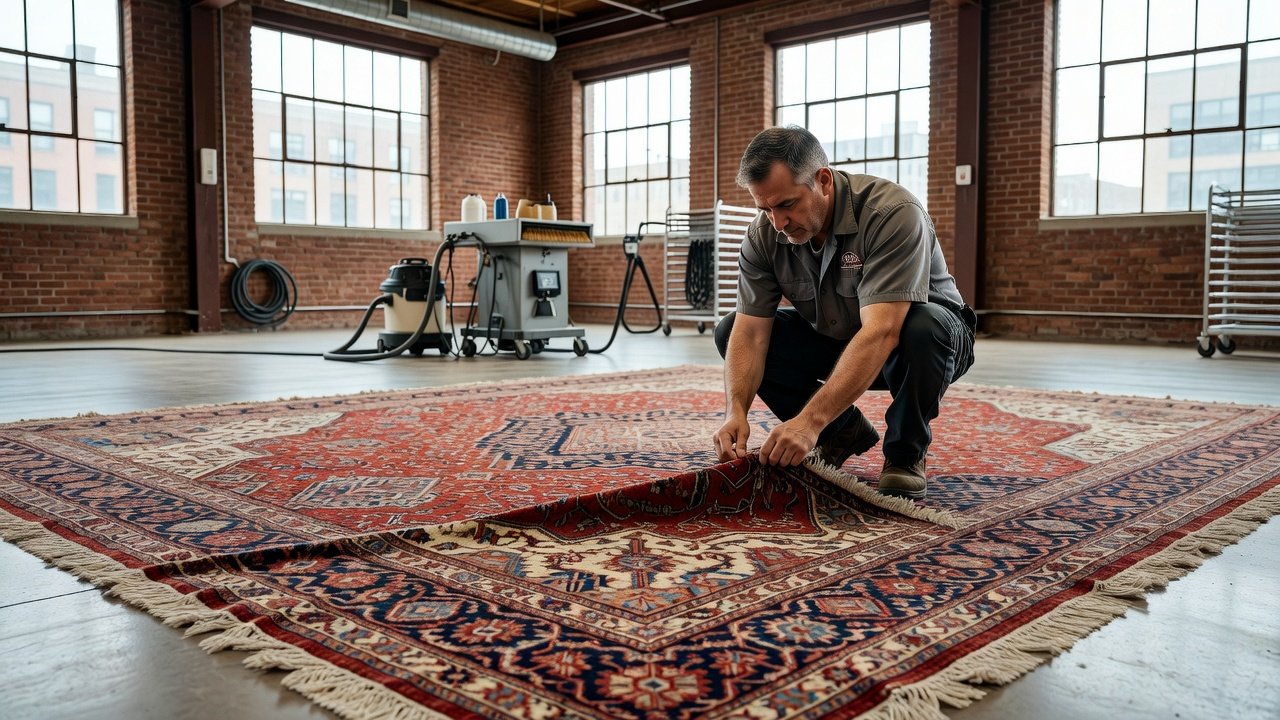
Most customers picture rug cleaning as something close to carpet cleaning a technician shows up, runs a machine over the surface, leaves. Professional area rug cleaning, especially for wool, silk, or hand-knotted Oriental and Persian pieces, works nothing like that. A reputable company will pick the rug up, bring it to a dedicated facility, and put it through a multi-step process: dusting to dislodge dry particulate (rugs hold far more dust than they appear to), fiber testing, washing with appropriate chemistry for that fiber type, controlled drying in a low-humidity environment, and final inspection.
That controlled drying step matters enormously in New York. Our apartments and townhouses whether you are in a pre-war six-story in Murray Hill or a ground-floor brownstone in Park Slope rarely have the space or airflow to dry a wet rug safely. Rugs dried too slowly develop mildew. Rugs dried too fast with forced heat can shrink or distort. A facility with proper drying infrastructure is not a luxury; it is part of what you are paying for. According to the IICRC’s S100 Standard for Professional Cleaning of Textile Floor Coverings, professional immersion washing for wool and natural-fiber rugs is the recommended method precisely because it allows controlled rinsing and drying that in-home methods cannot replicate.
Turnaround in New York is typically seven to fourteen business days for a standard cleaning. Rush service exists but costs more. If a company offers to clean your rug on-site and return it the same afternoon, that is worth asking about carefully not every rug or situation is wrong for that approach, but for anything delicate or heavily soiled, it usually means shortcuts were taken.
Credentials Worth Looking For
The cleaning industry has no universal licensing requirement in New York State, which means anyone can hang a shingle. That makes trade credentials more important, not less. The Institute of Inspection, Cleaning and Restoration Certification (IICRC) is the most recognized credentialing body in the field. Look for technicians or companies certified under the IICRC’s CRT (Carpet and Rug Technician) or WRT (Water Damage Restoration Technician) programs. These certifications require coursework, testing, and continuing education.
Beyond IICRC, ask whether the company has specific experience with the type of rug you own. Hand-knotted rugs Persian, Turkish, Afghan, Tibetan require different handling than machine-made synthetics. A company that cleans everything from wall-to-wall carpet to antique Tabriz rugs with identical protocols is telling you something important about their depth of knowledge.
Legitimate operations also carry general liability insurance and, if they employ workers, workers’ compensation. Ask for proof before anyone picks up your rug. In New York City, a single claim from an uninsured contractor can become your problem. This is not a formality.
Questions to Ask Before You Commit
A good company will not be put off by direct questions. Here are the ones that separate serious operators from the rest.
Where will my rug be cleaned? If the answer is your apartment, ask why. Off-site cleaning in a dedicated facility is the standard for quality work.
What fiber and dye testing do you do before cleaning? Every reputable company checks for dye stability before applying water or chemistry to a rug. Skipping this step is how colors bleed and never recover.
How do you dry the rug, and in what conditions? Look for a controlled-humidity facility. Avoid vague answers like “we hang it up.”
Do you have IICRC-certified technicians on staff? Not just on paper ask who will actually handle the rug.
Can you provide references from customers with similar rugs? A company that has cleaned antique rugs in Tribeca lofts and Astoria apartments for years should have customers willing to vouch for them.
What is included in the quoted price, and what costs extra? Fringe repair, deodorizing, stain treatment, and pickup and delivery often carry separate fees. Get this in writing.
What happens if the rug is damaged during cleaning? Ask about their liability policy and whether it is documented. A reputable company photographs rugs before and after and has a clear claims process.
Red Flags That Should Give You Pause
We have heard versions of the same bad experiences from customers coming to us after being burned elsewhere. A few patterns repeat.
Prices that seem implausibly low. In New York’s market, professional cleaning of a quality area rug — accounting for facility costs, skilled labor, proper chemistry, and transportation — runs roughly $3 to $6 per square foot for standard work as of 2026, with antique or silk pieces higher. A $40 flat quote for a 9×12 rug is not a deal; it is a signal that corners will be cut or that the final invoice will look nothing like the estimate.
High-pressure upselling after pickup. Some operators quote low, pick up the rug, and then call with a list of add-ons described in alarming terms. At that point your rug is in their warehouse and you are negotiating from a weak position. Reputable companies document everything upfront.
No physical address for their facility. A company that cleans rugs needs space to do it. If you cannot confirm where your rug will actually go, that is a problem. This matters whether you are in Williamsburg or Forest Hills.
Vague or evasive answers about insurance. Do not accept “we’re covered” as an answer. Ask to see a certificate of insurance.
How to Compare Quotes Fairly
Get at least two or three written quotes. Make sure each one itemizes the same scope of work: pickup, cleaning method, drying, delivery, and any specific treatments your rug needs. A quote that bundles everything with no line items is hard to compare and hard to dispute later.
Ask each company to describe their cleaning process for your specific rug material. If the answers sound identical regardless of whether you describe a machine-made polypropylene rug or a hand-woven Iranian Kashan, the company may not be adjusting their approach based on fiber type and that matters. The American Lung Association notes that rugs can trap allergens, dust mites, and mold spores, making thorough and method-appropriate deep cleaning important for households with allergy or asthma concerns. A one-size-fits-all process is unlikely to address those concerns reliably.
Finally, weight experience and communication as heavily as price. A company that responds clearly, answers your questions without impatience, and documents everything before they touch your rug is worth a moderate price premium over one that is evasive but marginally cheaper.
Frequently Asked Questions
How often should I have my area rug professionally cleaned in New York City?
According to the IICRC, area rugs should be professionally cleaned every 12 to 18 months depending on foot traffic and household conditions. In New York City, where urban dust, subway particulate, and high indoor humidity accelerate soil accumulation, we typically recommend annual cleaning for rugs in living rooms and entryways, and every 18 months for lower-traffic areas. Households with pets, children, or allergy sufferers should lean toward the shorter interval.
Is it safe to have a rug cleaned in my apartment rather than at an off-site facility?
For synthetic or lightly soiled rugs, in-home cleaning can be appropriate. For wool, silk, or hand-knotted rugs, off-site facility cleaning is strongly preferred. In-home methods cannot achieve the controlled rinsing and drying conditions that prevent shrinkage, color bleeding, and mildew a particular concern in New York apartments where ventilation is limited. If a company insists on in-home cleaning for a delicate piece without a clear explanation, ask more questions before agreeing.
What should I do if my rug is damaged during professional cleaning?
Document the damage immediately with photographs and contact the company in writing. A reputable rug cleaning company photographs rugs before and after cleaning and maintains a clear liability and claims process. Before handing over any rug, ask specifically about their damage policy and confirm they carry general liability insurance. In New York, verbal assurances are not enough getting the policy details in writing as part of your service agreement.
Ready to Have Your Rug Professionally Cleaned?
Your rug deserves more than a quick surface cleaning. Whether you have a delicate wool rug, a hand-knotted Persian piece, or a heavily used area rug, the right cleaning process can help protect its appearance and condition.
Eastside Rug Cleaning serves customers throughout New York City, including the Upper East Side, Tribeca, Astoria, Williamsburg, Forest Hills, and surrounding neighborhoods. Contact us today to discuss your rug, ask questions about the cleaning process, and receive a straightforward quote with no hidden surprises.
Call Eastside Rug Cleaning today to schedule your rug cleaning or request a quote.
Related from East Side Rug Cleaning: Rug Color Restoration Manhattan · Rug Cleaning City · Team Our Cleaning