
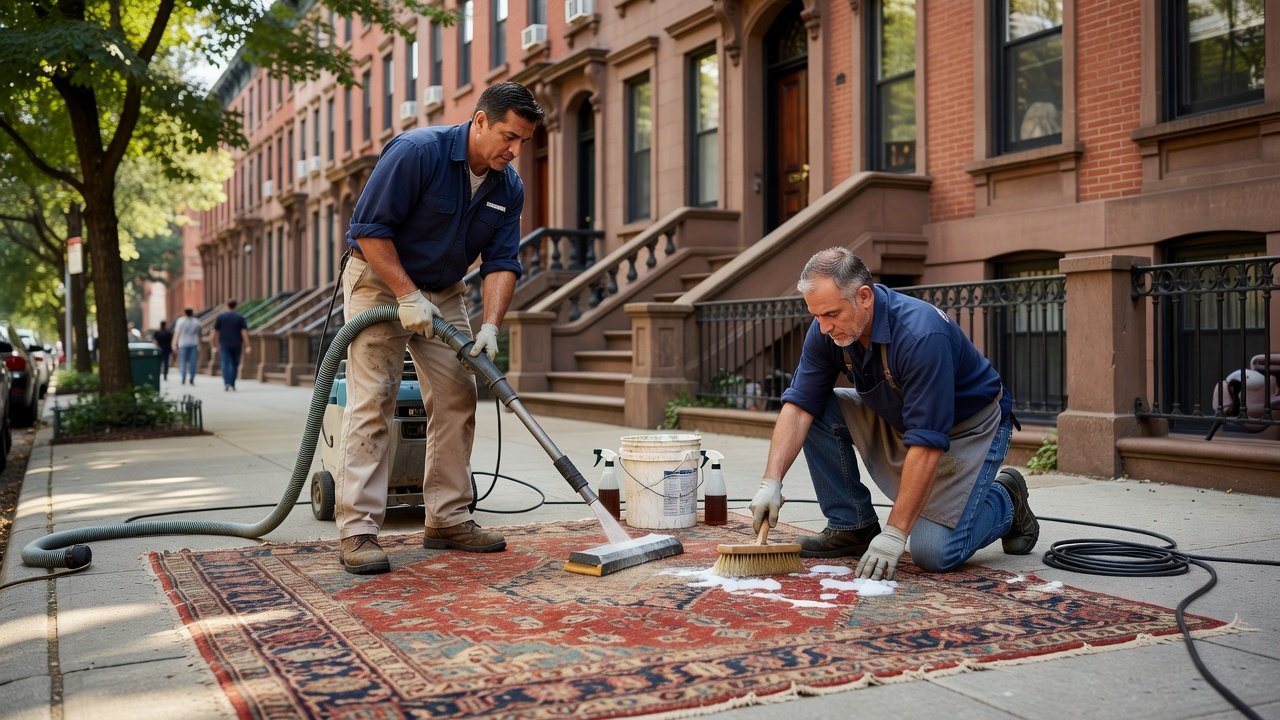
Trusted Wool Rug Cleaning Service Brooklyn: 2026 Guide for Riverdale, Bronx Residents
A lot of people assume that because wool is durable, it forgives rough treatment. It does not. We see the consequences of that assumption almost every week a hand-knotted wool rug brought to us from Riverdale after a well-meaning homeowner ran it through a DIY steam cleaner or soaked it in the bathtub and let it dry against a wall. Wool shrinks, bleeds, and felts under the wrong conditions, and those changes are often permanent. If you’re searching for a wool rug cleaning service in Brooklyn or in the Bronx, this guide is meant to help you hire the right company before something goes wrong, not after.
We’ve cleaned thousands of wool rugs across New York City from pre-war apartment buildings in Riverdale to brownstones in Park Slope, from Astoria co-ops to Tribeca lofts. The questions homeowners ask us most often aren’t about price. They’re about trust: how do you know a rug cleaner actually knows what they’re doing with a wool piece that cost $3,000 or was passed down through a family?
Here is honest, practical guidance on that question. We’ll cover what you can reasonably handle at home, what genuinely requires professional equipment, how to evaluate a cleaner’s credentials, and what questions to ask before you hand over anything irreplaceable.
What You Can Handle at Home and Where It Ends
Routine maintenance is well within reach for any homeowner. Vacuuming a wool rug two to three times per week on a low-suction setting without the beater bar removes surface particulates before they work their way into the pile. Rotating the rug every six months evens out foot traffic. Blotting a fresh spill immediately with a clean, dry cloth will lift a surprising amount of liquid before it sets. These habits matter and they genuinely extend the life of a rug.
The limits of DIY show up fast, though. Wool fibers are protein-based and respond to heat, alkaline detergents, and aggressive agitation in ways that synthetic rugs simply don’t. A pH-neutral wool wash applied at home can work for a small, low-value piece you’re comfortable risking. But full submersion cleaning, pH management across the wash and rinse cycles, thorough controlled drying, and pile grooming after washing require equipment that does not fit in a New York City apartment. There is no outdoor space to dry a 9×12 flat in Riverdale in January. There is no way to extract enough water from a dense hand-knotted pile with a home wet-vac before mildew sets in. That is not a knock on homeowners it’s just physics and square footage.
The American Lung Association notes that rugs and carpets trap allergens, dust mites, pet dander, and mold spores, making regular deep cleaning especially important for asthma and allergy sufferers. In NYC’s high-humidity buildings, that risk is not theoretical. It’s something we see in rugs from the Bronx to Brooklyn with real regularity.
Credentials That Actually Mean Something
The cleaning industry has no universal licensing requirement, which means nearly anyone can rent a machine and call themselves a rug cleaner. Credentials separate operators who have invested in formal training from those who haven’t.
The credential that carries the most weight in our industry is IICRC certification the Institute of Inspection, Cleaning and Restoration Certification. Look specifically for technicians certified under the IICRC’s Rug Cleaning Technician (RCT) or Applied Textile Cleaning Technician (ATCT) designations. The IICRC’s S100 Standard for Professional Cleaning of Textile Floor Coverings recommends professional hot-water extraction or immersion washing for wool and natural-fiber rugs to avoid shrinkage and color bleeding. A company whose staff has been trained to that standard is applying a documented, peer-reviewed process — not guessing.
Beyond IICRC, ask whether the company has completed any training through the Association of Rug Care Specialists (ARCS) or carries insurance specifically covering damage to customer property. A cleaner who can’t produce a certificate of insurance is a cleaner whose mistake becomes your problem.
Questions to Ask Before You Hand Over the Rug
A serious wool rug cleaner will not be put off by direct questions. These are the ones worth asking.
Do you clean wool rugs in a dedicated facility, or on-site? On-location cleaning almost always means portable equipment and no controlled drying. Full immersion washing and proper drying require a plant. Any company worth hiring for a quality wool piece should be taking it off-site.
How do you test for colorfastness before washing? Wool dyes — particularly in older Oriental and tribal rugs — can bleed badly. A competent cleaner tests each color field before immersion. If they don’t know what you’re asking, that’s your answer.
What pH do you use for wool, and how do you neutralize after washing? Wool requires a mildly acidic to neutral pH environment. High-alkaline detergents destroy wool fibers. This question separates technicians from people with a machine.
How long does drying take, and how is it controlled? Wool rugs must dry flat and fully within a reasonable window to prevent mildew. Ask specifically about airflow, temperature, and whether drying is monitored. Vague answers here are a problem.
What happens if the rug is damaged in your care? Get the answer in writing. Reputable companies carry inland marine insurance that covers customer goods. Read whatever they give you before signing.
Do you offer a pre-cleaning inspection report? Good operators document the rug’s condition before touching it — existing stains, wear areas, fringe condition, any prior repairs. This protects both parties and signals professionalism.
What is the full price, and what does it include? Pick-up, cleaning, drying, pile grooming, fringe cleaning, and delivery are often quoted separately. Get the all-in number before you commit.
Red Flags That Signal a Bad Operator
We hear the aftermath of these situations from clients who come to us after a bad experience — someone in Williamsburg who paid a low flat rate and got a rug back still damp, or a family in Murray Hill whose antique Sultanabad bled pink into the field because no colorfastness test was done.
Be cautious of any cleaner who quotes a price per square foot over the phone without asking about fiber type, construction, age, or soiling level. Wool rugs and polypropylene rugs are not the same job, and treating them identically signals a lack of training. Similarly, avoid companies that offer same-day turnaround for wool pieces. Proper washing and controlled drying for a dense wool rug takes time — typically several days at a minimum. Speed is not a virtue here.
Extremely low pricing is another signal worth examining. According to the IICRC, area rugs should be professionally cleaned every 12 to 18 months depending on foot traffic and household conditions. Quality cleaning costs money because it requires trained labor, industrial equipment, controlled drying, and proper chemistry. A price that seems too good for a hand-knotted wool rug almost always reflects corners being cut somewhere in that chain.
Finally, if a company cannot or will not show you their facility or provide references, that is reason enough to keep looking.
How to Compare Quotes Without Getting Misled
The only useful comparison is an itemized, apples-to-apples one. When you contact multiple cleaners, give each the same information: rug dimensions, fiber type (wool), approximate age if known, and any specific concerns like stains or pet odor. Then ask each for a written quote that lists every service included.
The Rug and Home industry estimates that hand-knotted Oriental and Persian rugs can last over 100 years with proper cleaning and storage, but improper DIY cleaning is among the top causes of premature fiber damage. That context matters when you’re weighing a $180 quote against a $340 one for the same rug. The cheaper option may save you money this year and cost you the rug.
Also consider logistics. If you’re in Riverdale, Bronx, ask whether the company offers pick-up and delivery — lugging a rolled 8×10 on the 1 train is nobody’s good afternoon. A company with routes that cover the Bronx and upper Manhattan is a practical advantage, not just a convenience.
A Real Situation from Riverdale
Last spring, a client contacted us from Riverdale a third-floor apartment off Palisade Avenue, no elevator. She had a beautiful 6×9 hand-knotted Afghan wool rug, maybe 30 years old, with a coffee and pet odor issue she’d been managing with baking soda and spot spray for two years. She’d gotten one quote from a local operation she’d found through a flyer, no IICRC mention, flat rate over the phone, same-week turnaround. She wanted a second opinion before committing.
We picked up the rug, did a full inspection and colorfastness test, and found active pH damage along one edge consistent with an alkaline cleaning product used at home over time. We cleaned it using a controlled immersion process, neutralized properly, dried it flat over four days, and groomed the pile before returning it. The odor was gone. The edge damage was stabilized. The rug looked like itself again.
She told us the other quote had been $95. Ours was $210. She understood the difference by the end of the conversation, and the rug is still in her living room.
Frequently Asked Questions
How often should a wool rug be professionally cleaned in a New York City apartment?
According to the IICRC, professional cleaning every 12 to 18 months is appropriate for most rugs, but wool rugs in high-traffic NYC apartments — especially those in households with children, pets, or allergy sufferers — generally benefit from annual cleaning. Urban dust, humidity, and limited ventilation accelerate soil buildup in ways that aren’t always visible until the rug is inspected under proper lighting.
Can I use a rental steam cleaner on a wool rug at home?
We strongly recommend against it. Rental steam cleaners use high heat and often alkaline detergent solutions that are not safe for wool fibers. They also leave significant moisture in the pile that cannot be adequately extracted or dried in a typical NYC apartment, creating real mildew risk. The damage from a single improper steam cleaning — shrinkage, color bleeding, fiber felting — can be irreversible and costly to repair.
What should a professional wool rug cleaning service in Brooklyn or the Bronx actually cost in 2026?
For a hand-knotted wool rug, expect to pay roughly $3 to $6 per square foot for full immersion washing, drying, and pile grooming at a reputable facility in the New York City area. A standard 8×10 wool rug typically runs between $240 and $480 depending on soiling level, fiber density, and any specialty treatments like odor removal or fringe restoration. Quotes significantly below that range often reflect incomplete service or undertrained technicians.
Schedule Your Professional Wool Rug Cleaning
If you have a wool rug in Riverdale, the Bronx, Park Slope, Astoria, or anywhere across New York City and you want an honest assessment before committing to a cleaner, reach out to us at Eastside Rug Cleaning. We offer pick-up and delivery, pre-cleaning inspections, and straightforward pricing with no hidden fees. We’re happy to answer your questions before you book — because a rug that’s been in your family for 30 years deserves more than a guess.
Related from East Side Rug Cleaning: Rug Cleaning City · Team Our Cleaning · Trusted Certified Rug Cleaner Upper East Side